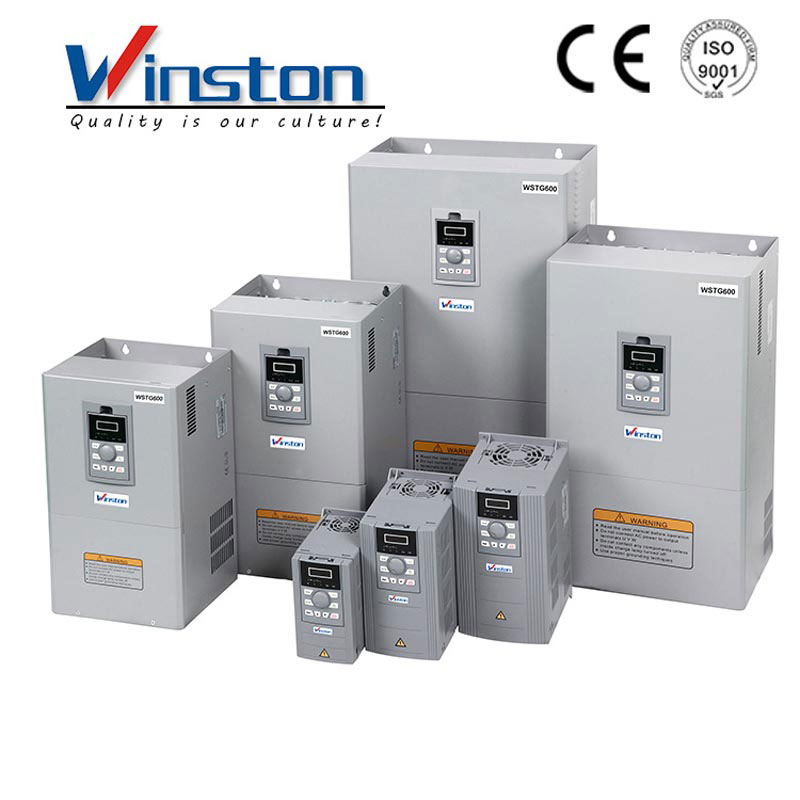





Imagine an electric motor in an industrial setting, like a powerful pump or a conveyor belt. Connected directly to the mains power, it runs at a single, fixed speed—full blast, all the time. This is not only wasteful but also limits precision and control. The device that solves this problem is the frequency inverter. As you’ve succinctly noted, at its core, "the frequency inverter converts an input voltage (e.g., alternating current) into a directional voltage that is suitable for precise industrial applications. But how does this conversion enable such precision? Let’s explore its function step by step.
The primary job of a frequency inverter (also called a Variable Frequency Drive or VFD) is to liberate the motor from its fixed-speed shackles. It takes the constant-frequency AC power from the grid and transforms it into a precisely adjustable power source for the motor. This allows operators to infinitely vary the motor’s speed, torque, and direction in real-time to match the exact demands of the application.
To achieve this, the frequency inverter performs a sophisticated three-stage transformation. Your description perfectly captures the essence of the first and final stages:
This is where the input alternating current is converted. The inverter first rectifies the incoming AC voltage into a rough Direct Current (DC) voltage. Think of this as "straightening out" the AC wave.
The rough DC is then passed through a bank of capacitors. This stage smooths and stabilizes the DC voltage, creating a clean, steady "DC bus" that acts as an energy reservoir. This intermediate step is crucial for the precision to come.
This is the heart of the process and the source of the device’s name. Using high-speed electronic switches (IGBTs), the inverter chops the smooth DC voltage back into a new, synthetic AC output. Crucially, it has full control over the characteristics of this new AC waveform —its frequency (which dictates motor speed), its voltage (which controls torque), and its phase sequence (which dictates direction). This is the "directional voltage suitable for precise industrial applications."
By mastering this conversion, the frequency inverter delivers game-changing advantages:
Unmatched Energy Efficiency: Instead of running at full speed and wasting energy through mechanical brakes or throttling valves, systems can run exactly at the needed speed. For pumps and fans, a 20% speed reduction can lead to energy savings of nearly 50%.
Precision Process Control: In applications from food mixing to paper manufacturing, the ability to fine-tune speed and torque ensures consistent, high-quality output and smoother production cycles.
Reduced Mechanical Stress: The inverter can gently ramp the motor up to speed and bring it to a soft stop, eliminating damaging current surges and mechanical shocks. This dramatically extends the lifespan of motors, pumps, and gearboxes.
Smart Operation: Modern frequency inverters are intelligent, communicating with central control systems to enable automated, responsive, and data-driven industrial processes.
In summary, calling the frequency inverter a simple converter is an understatement. It is an intelligent power architect. It takes the raw, fixed power from the grid and meticulously rebuilds it into a tailored, "directional voltage" that gives engineers and machines complete command over motion. From optimizing a building’s HVAC system to synchronizing a robotic assembly line, the frequency inverter is the silent, efficient brain behind the precision of modern industry.
GET A QUOTE